Built for Breakthroughs
Northwestern’s inaugural URIC Research Impact Day spotlighted how agile, cross-campus engines turn bold ideas into solutions
When Northwestern Engineering’s John Rogers set out to design the world’s smallest pacemaker—smaller than a grain of rice—he wasn’t working within the boundaries of a single discipline or school. The device, which dissolves harmlessly in the body after delivering life-saving therapy to fragile newborn hearts, emerged from deep collaboration among materials scientists, electrical engineers, and clinicians at the Feinberg School of Medicine. It’s a powerful example of how interdisciplinary research across Northwestern's schools turns bold ideas into transformative medical solutions.
A Showcase of Interdisciplinary Impact
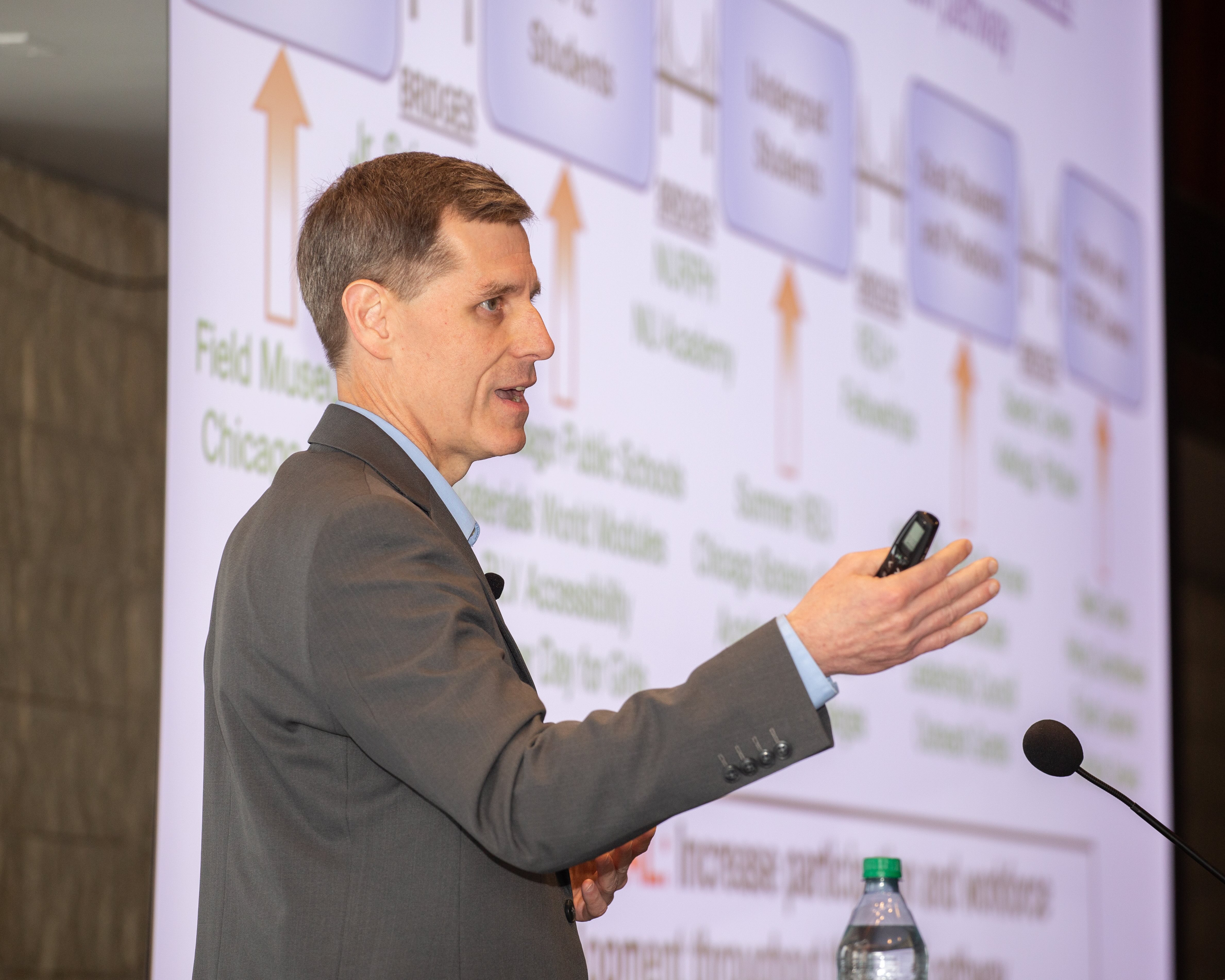 That collaborative spirit was evident at Northwestern’s inaugural University-wide Research Institutes and Centers (URIC) Research Impact Day, hosted by the Office for Research. The event demonstrated how these cross-campus research hubs accelerate discovery and turn innovation into real impact by combining diverse faculty expertise, shared infrastructure, and intentional team science.
Over 250 faculty, staff, students, and postdocs attended, with nearly all of Northwestern’s about two dozen institutes and centers taking part. They represented research in biosciences, data science and AI, social sciences and global studies, and physical sciences. Together, URICs connect more than 700 faculty members across 75 departments, supporting team-based approaches to solving challenges that are too complex for any single discipline or school.
Among those participating was the Chemistry of Life Processes Institute (CLP), which highlights Northwestern’s cross-school research excellence by bringing together faculty and clinicians from the Feinberg School, Weinberg College of Arts and Sciences, and McCormick School of Engineering to pioneer protein-informed science. As a leading hub for proteomics—the large-scale study of proteins—CLP advances collaborative discoveries into the molecular mechanisms of aging and age-related diseases to develop new diagnostics and therapeutic targets for conditions like Alzheimer’s and ALS. Its Convergence Research Initiatives unite chemists, engineers, life scientists, and clinicians to turn fundamental insights about proteins into clinical strategies.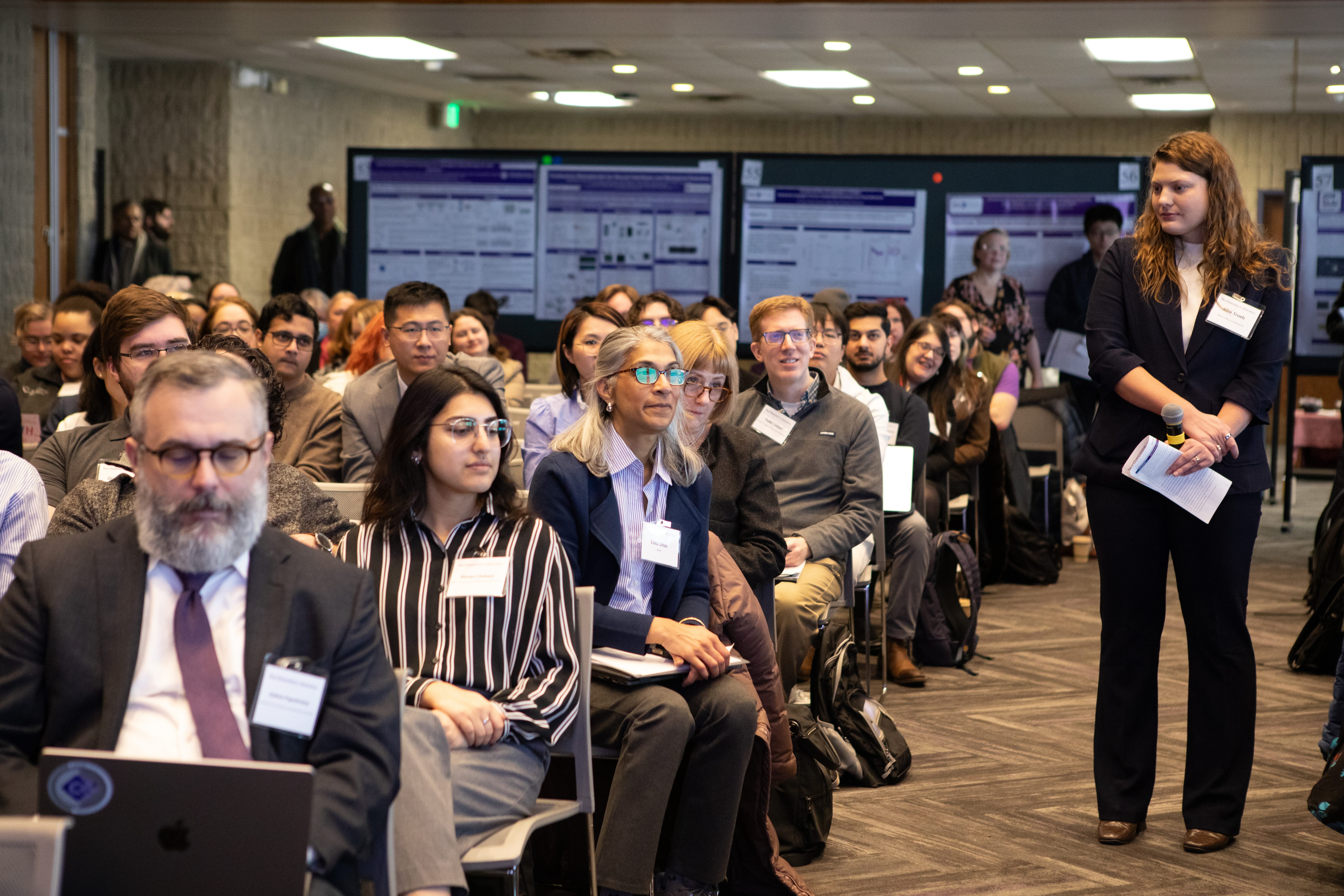
Likewise, the Center for Synthetic Biology (CSB) brings together engineers, chemists, life scientists, clinicians, and social scientists to design and control biological systems for applications in medicine, manufacturing, and sustainability. Research teams are creating programmable biological platforms for drug delivery, diagnostics, and biomaterials, while involving scholars in ethics, policy, and societal impact to guide the responsible use of emerging technologies.
The event’s presentations highlighted how shared infrastructure and collaborative communities support high-risk, high-reward research. Speakers included URIC directors and faculty affiliates: materials scientist and biomedical engineer Rogers, who is director of the Querrey Simpson Institute for Bioelectronics (QSIB); materials scientist Mark Hersam, director of the Materials Research Center (MRC); sociologist Andrew Papachristos, executive director of the Institute for Policy Research (IPR); chemist and biomedical engineer Milan Mrksich, affiliate of the CSB and the International Institute for Nanotechnology (IIN); and electrical and computer engineer Ted Sargent, executive director of the Paula M. Trienens Institute for Sustainability and Energy. Their talks focused on how cross-disciplinary collaborations in bioelectronics, materials science, chemistry, sustainability, nanotechnology, and the social sciences bring exciting ideas to fruition.
“When institutes collaborate, ideas grow, and the impact timeline shortens,” said Sargent. He highlighted the Trienens Institute’s campus partnerships, including with the Innovation and New Ventures Office, IPR, the ADAPT Initiative, and the Kellogg School’s Abrams Climate Academy, and emphasized external engagements and the Trienens Industry Affiliates Program as key industry links.
As one of Northwestern’s flagship URICs, IPR illustrates how these research hubs turn scholarship into societal impact at scale, said Papachristos. With more than 250 faculty fellows, staff, associates, and students across disciplines, IPR has been a platform since 1968 for bringing together evidence-based research on urgent societal issues—from health inequities, education, and labor markets to community safety, democracy, and global development.
The event’s poster session was lively, featuring 62 examples from URICs that sparked discussion. Topics included low-cost battery manufacturing, advances in perovskite solar cells, nanomaterials discovery, impacts of childhood adversity on maternal health, 3D printing of artificial cells, at-home lead tests, Arabic manuscripts in English translation, new physics techniques for gravitational waves, and innovative methods of research communication.
A Cross-Campus Engine for Discovery
Speakers said the URICs strengthen Northwestern’s collaborative base by offering shared infrastructure, administrative support, and robust intellectual communities that encourage interdisciplinary work. For example, the MRC, founded in 1960, supports 14 core facilities and nearly 300 instruments used annually by over 1,600 researchers in nanomaterials, quantum systems, energy, and sensing.
Vice President for Research Eric Perreault emphasized that URICs have long been established to grow and strengthen University partnerships, noting that the institutes and centers have an extensive history, with some dating back to the 1950s. “Many institutions talk about interdisciplinarity. At Northwestern, we have been living it for a long time. URICs are where disciplines and schools converge and where ideas gain momentum.”
Training new researchers is essential to the URIC model, with many students, postdocs, and alumni gaining hands-on experience with shared equipment, interdisciplinary teams, and mentorship. At QSIB, alumni from Rogers’s group have become university professors, industry researchers, lab scientists, and startup founders. Notably, 139 postdocs—77% of all those trained—have obtained faculty positions worldwide. These outcomes show how URICs foster mentorship, skills, and collaboration to succeed in academia, industry, and beyond.
URICs also help Northwestern attract and retain top faculty by fostering strong intellectual communities and providing access to shared facilities and a vibrant translational environment. The IIN demonstrates this impact, with some 240 affiliated faculty members, more than 40 startups launched, and over $1 billion in venture capital raised. Papachristos described URICs as delivering “a huge return for Northwestern,” while Mrksich called them a “vital competitive advantage, one we should celebrate and strengthen.”
A Community Built to Last—and Adapt
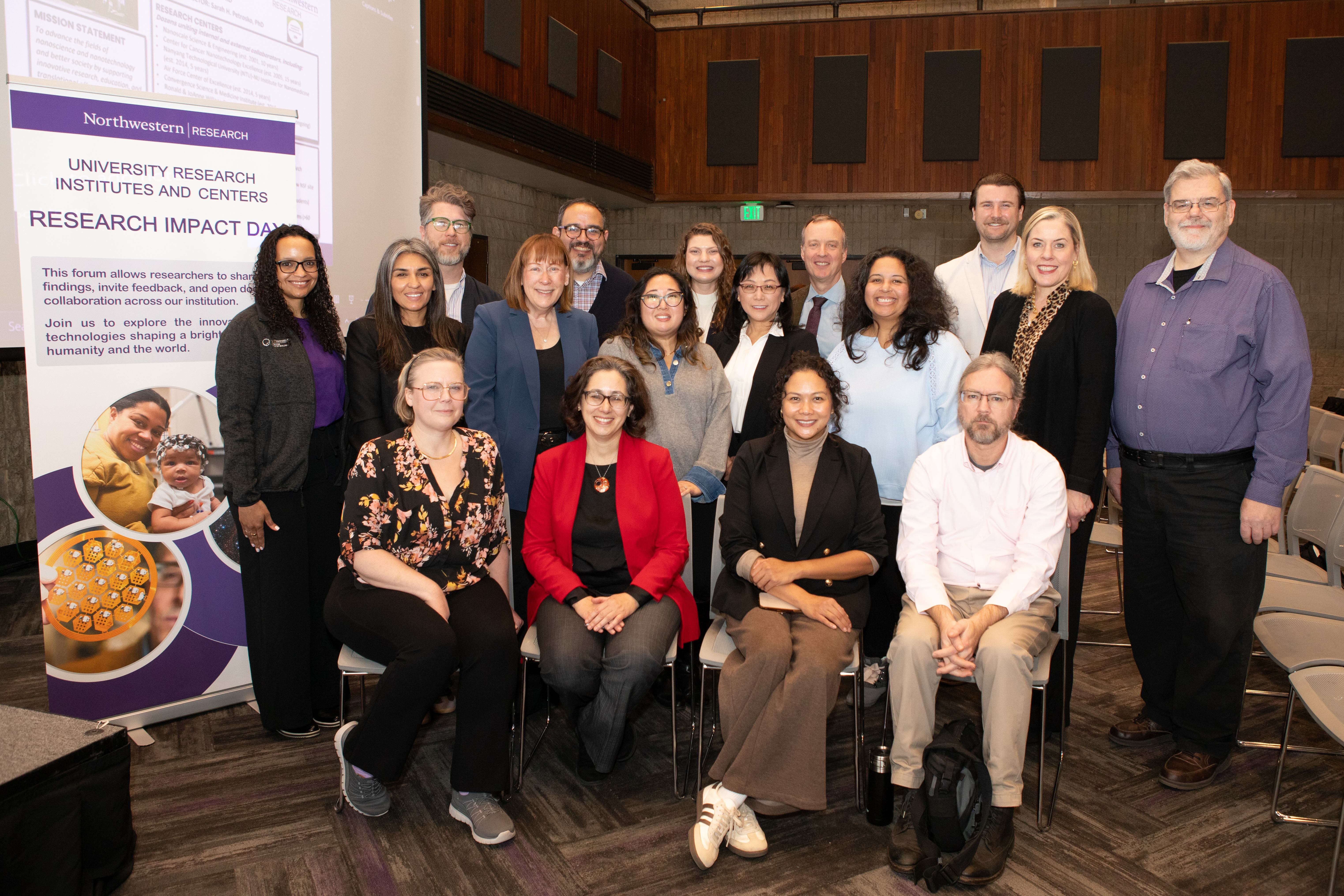
Jian Cao, associate vice president for research, who helped plan the program with the URICA team, expressed gratitude to faculty and staff and summed up the program’s unifying message: “URICs connect people, platforms, and purpose. They accelerate discovery, train the next generation, and turn ideas into solutions.”
Perreault emphasized that URICs are not static. They are designed to be agile and responsive, launching when the University identifies emerging opportunities, evolving as those opportunities mature, and sunsetted once the Northwestern-wide infrastructure supporting URICs is no longer needed.
“Continued investment in URICs represents a strategic commitment to the University’s future,” Perreault said. “These institutes and centers reflect something deeply Northwestern: ambitious ideas, collaborative interdisciplinary problem-solving, and a belief that knowledge can make the world better.”
—Matt Golosinski
Pictured, from top: Doctoral student Eric Yang (materials science and engineering) was among those presenting their interdisciplinary research at the event. Professor Mark Hersam, director of the Materials Research Center, delivered one of the event's presentations. The audience for Research Impact Day included some 250 faculty, staff, and students. Some members of the Office for Research team pose for a photo.