Synthetic biology center marks 10 years of discovery and impact
By the Numbers
Over the past decade, about $53 million in research funding has flowed through CSB, supporting research, training, shared infrastructure, and translational work across medicine, sustainability, biomaterials, agriculture, and biotechnology. Today, the center connects 24 faculty members across the Weinberg College of Arts and Sciences, the McCormick School of Engineering, and the Feinberg School of Medicine. More than 700 trainees have participated in CSB-affiliated research and training, contributing to high-profile publications that have earned nearly 50,000 citations. The center also boasts 81 patents and patent applications, as well as multiple startups.
Together, those investments have helped build shared capabilities—and a collaborative community—that can move ideas from early discovery toward real-world use.
From bold origins to real-world impact, Northwestern’s CSB enters its second decade at the forefront of biodesign and translation
By Matt Golosinski
Photos: Vanessa Bly
The Center for Synthetic Biology (CSB) at Northwestern marked its 10th anniversary May 13–14 with a two-day gathering of faculty, trainees, alumni, collaborators, supporters, biotech ecosystem partners and campus leaders, taking stock of a decade of interdisciplinary work and looking ahead to what comes next for engineering biology.
Synthetic biology applies engineering approaches to biology, opening new paths in medicine, manufacturing, agriculture and materials. Over 10 years, CSB has helped make Northwestern a national destination for research and training in the field, bringing together teams and tools that don’t fit neatly within any one department.
Tracing Origins, Capturing Voices — and a Tribute from Capitol Hill
The first day explored CSB’s origins and evolution through remarks from University leaders, center founders, and longtime supporters.
Henry S. Bienen, Interim President and President Emeritus of Northwestern, called CSB “a bold initiative aligned with Northwestern’s mission,” noting that the University made an early investment in a field now shaping medicine, food systems, and advanced materials. “Technologies that were once a dream now are in our clinics, on our tables, and in our homes,” he said.
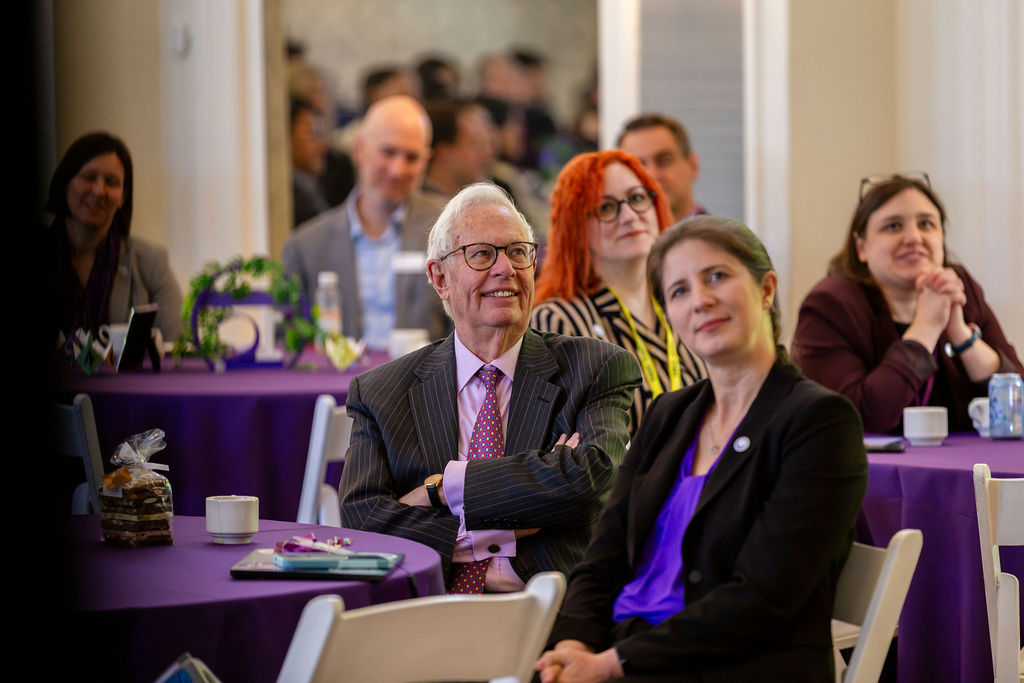
Danielle Tullman-Ercek
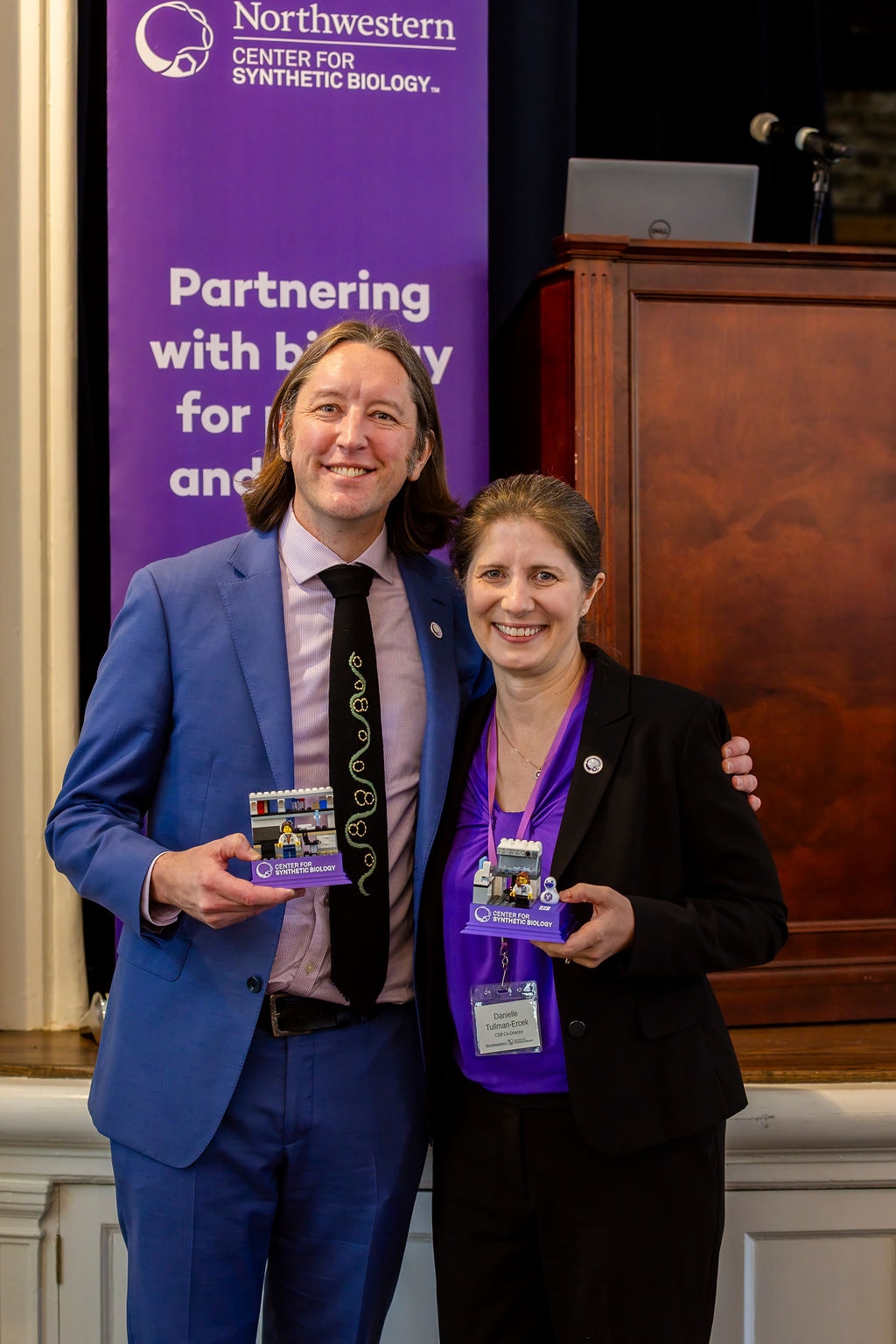
CSB Co-Directors Julius Lucks and Danielle Tullman-Ercek emphasized that the center’s impact goes beyond papers and patents. “Trainees are perhaps our most important contribution,” said Lucks. “We created and grew this wonderful community while educating the next generation of scientific leaders who have already started their own labs at the top companies and institutions, continuing to spread the legacy of Northwestern globally.”
Tullman-Ercek also highlighted the contributions of longtime Director of Operations and Outreach Yael Mayer and the broader CSB staff who “worked tirelessly to keep the center running” over the past 10 years. “We couldn’t do it without this amazing team,” she said.
The anniversary revisited the center’s early formation, which began years before CSB’s formal launch in 2016. Former McCormick Dean Julio Ottino recalled that the initial “signal” for synthetic biology at Northwestern was “very weak at first,” requiring leaders to spot where interdisciplinary momentum could emerge across campus. “Obviously,” he said, “CSB was amplified.”
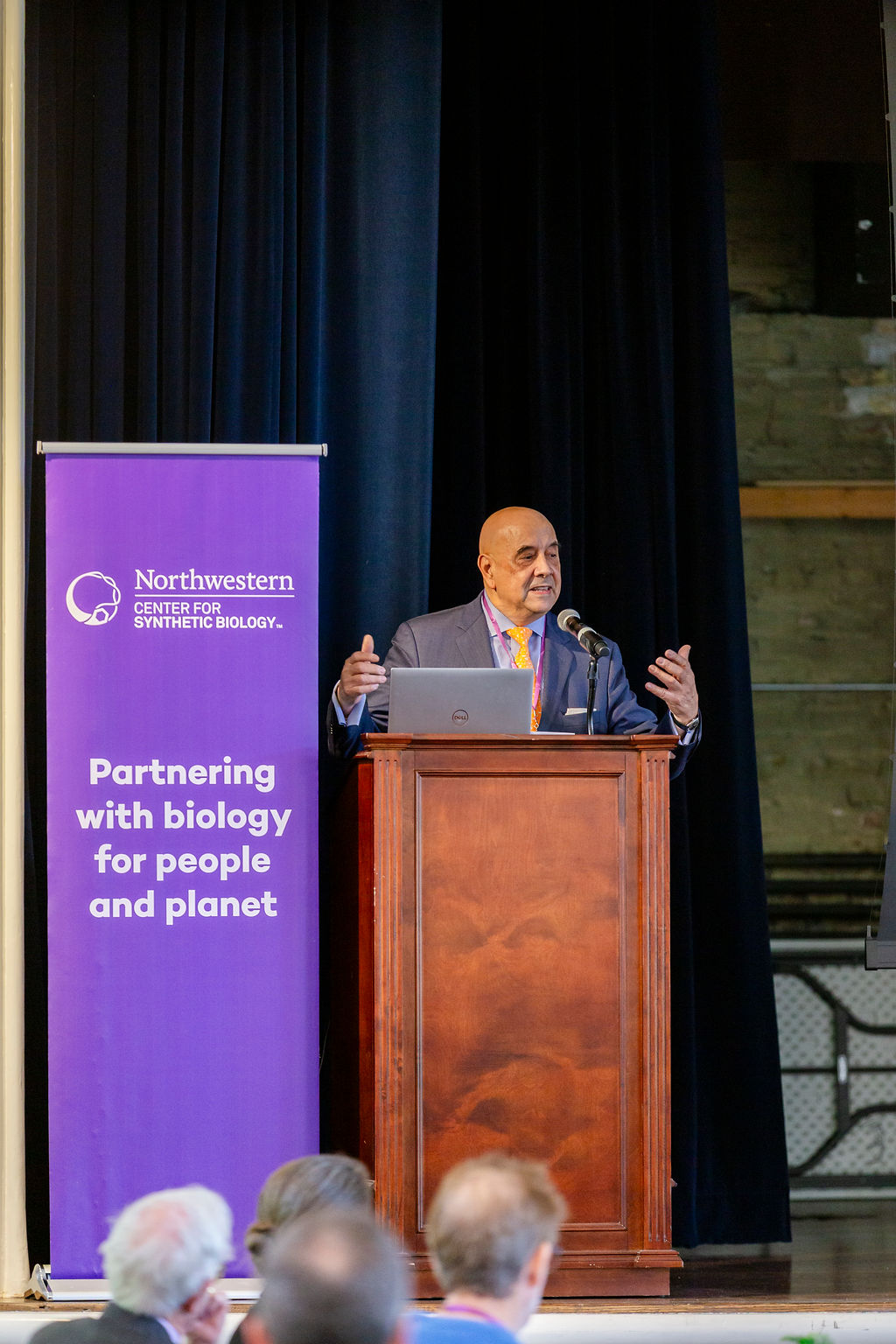
CSB co-founder Michael Jewett, who launched the center alongside co-founder Milan Mrksich, said senior leaders at Northwestern played a critical role in enabling CSB’s success. Jewett, now at Stanford University, also pointed to Mrksich as a key driver in the center’s early momentum, calling him a real “catalyst” for CSB. He noted that Northwestern’s collaborative ecosystem, as well as a “collective unselfishness” around how to create a new research hub, were among the keys to CSB’s success.
With Ottino’s blessing, Jewett said he and Mrksich went on “roadshows” around campus—and across the country—to “get in front of people” in ways that strengthened the framework for CSB and helped attract additional talent. “CSB has raised Northwestern’s leadership profile in the field,” Jewett said, noting that the University now has “one of the largest concentrations of synbio faculty in the nation.”
In prerecorded remarks, Mrksich reflected on how the center outpaced even its earliest goals. “We had ambitious plans and great vision—and we exceeded even our most ambitious aspirations,” he said. “CSB is now a signature research center on campus and a destination for talent nationwide. We have a rich group of trainees and faculty, and many exciting multi-PI and cross-school projects underway.”
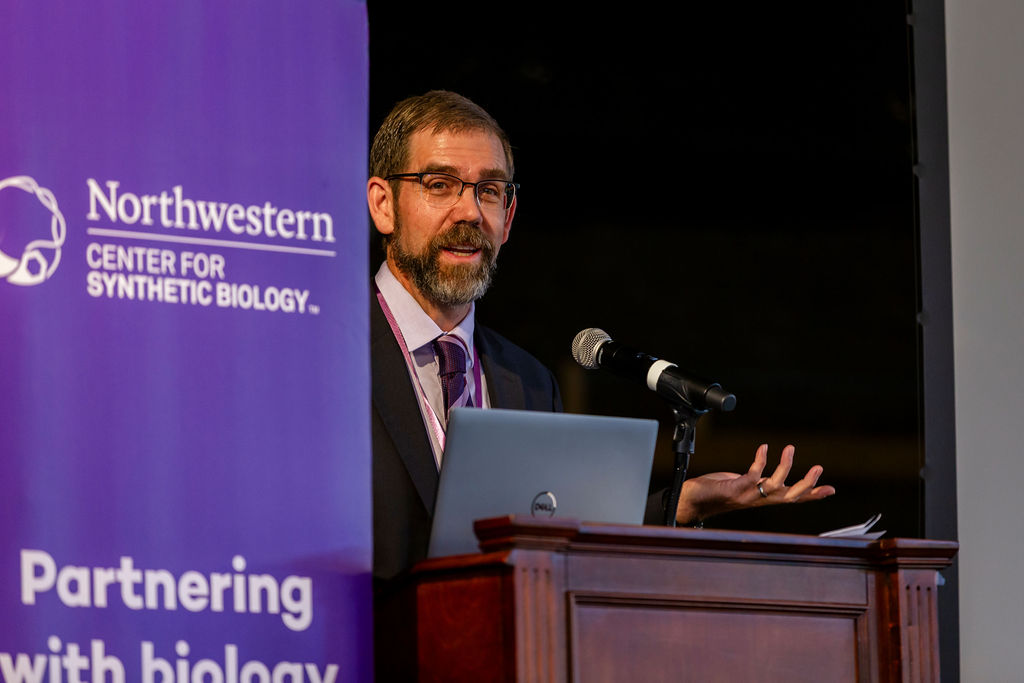
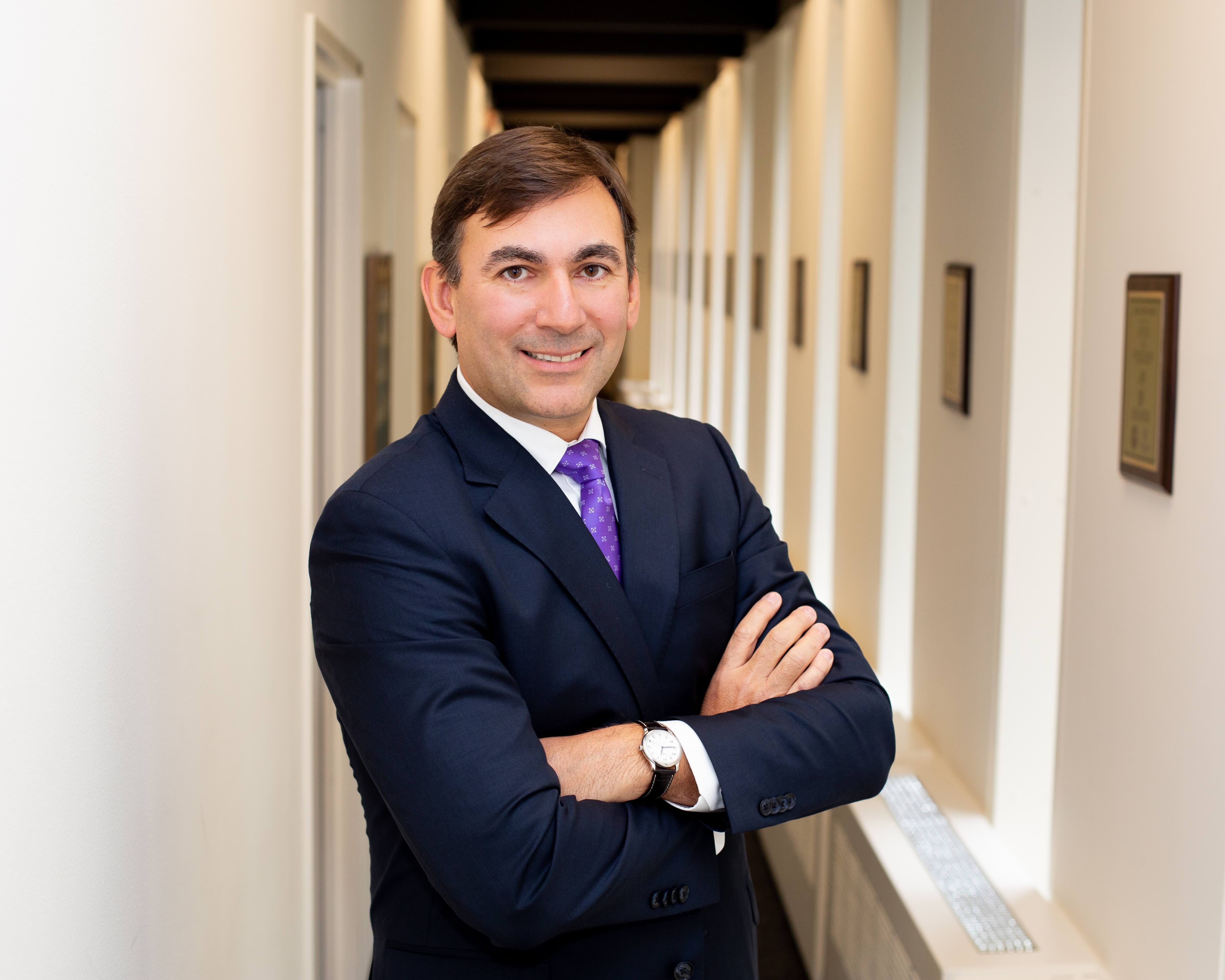
The celebration also marked the launch of CSB’s first External Advisory Board. It will be chaired by Melih Keyman, president and CEO of Keytrade AG, and brings together leaders from biotechnology, engineering, and industry. The board will be instrumental in guiding the CSB directors as they continue to build on their momentum over the coming years.
The announcement was paired with a panel discussion moderated by McCormick Dean Chris Schuh, featuring Keyman alongside Ena Cratsenburg (chief business officer, Ginkgo Bioworks), Jeff Fairman (vice president of research and co-founder, Vaxcyte), Jose Carlos Garcia-Garcia (senior director and head of corporate biotechnology, Procter & Gamble), and Christopher Voigt (head of biological engineering, MIT). The group reflected on how academia and industry are working together in new ways, what’s next for translating synthetic biology into real-world impact, and why interdisciplinary collaboration is becoming even more essential to pushing the field forward.
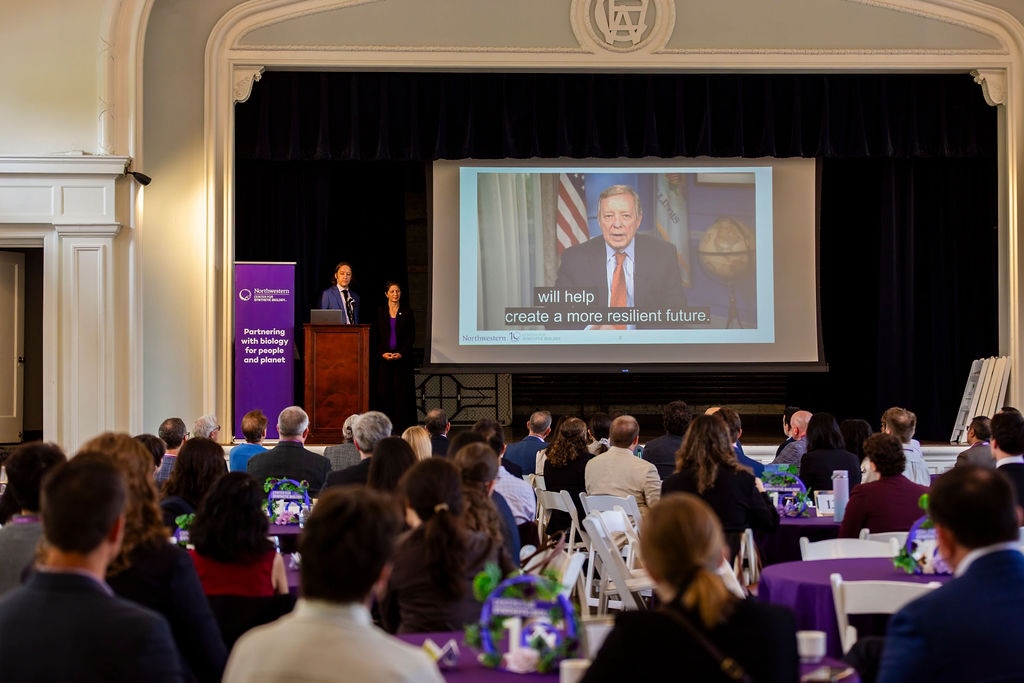
One of the most notable tributes came via a prerecorded video from U.S. Senator Richard J. Durbin (D-IL), whose advocacy has helped secure approximately $13 million of the $53 million in federal funding CSB has raised to fuel its research. Durbin praised the center for “taking smart risks and innovating to push the boundaries every single day,” highlighting its work in biomanufacturing, sustainability, and treatments for serious disease.
Artist and former Northwestern Artist-at-Large Dario Robleto noted the University’s efforts to make its science public-facing and to support “ambitious cross-disciplinary explorations”—including his 2023 exhibition on science and empathy. He also invited participants to contribute to an audio time capsule modeled after the Voyager Golden Record, capturing CSB’s emphasis on public engagement and scientific culture alongside discovery.
Provost-designate Erik Luijten introduced the Distinguished Trainee Awards during the afternoon program, describing the honors as a reflection of CSB’s commitment to rigorous interdisciplinary training.
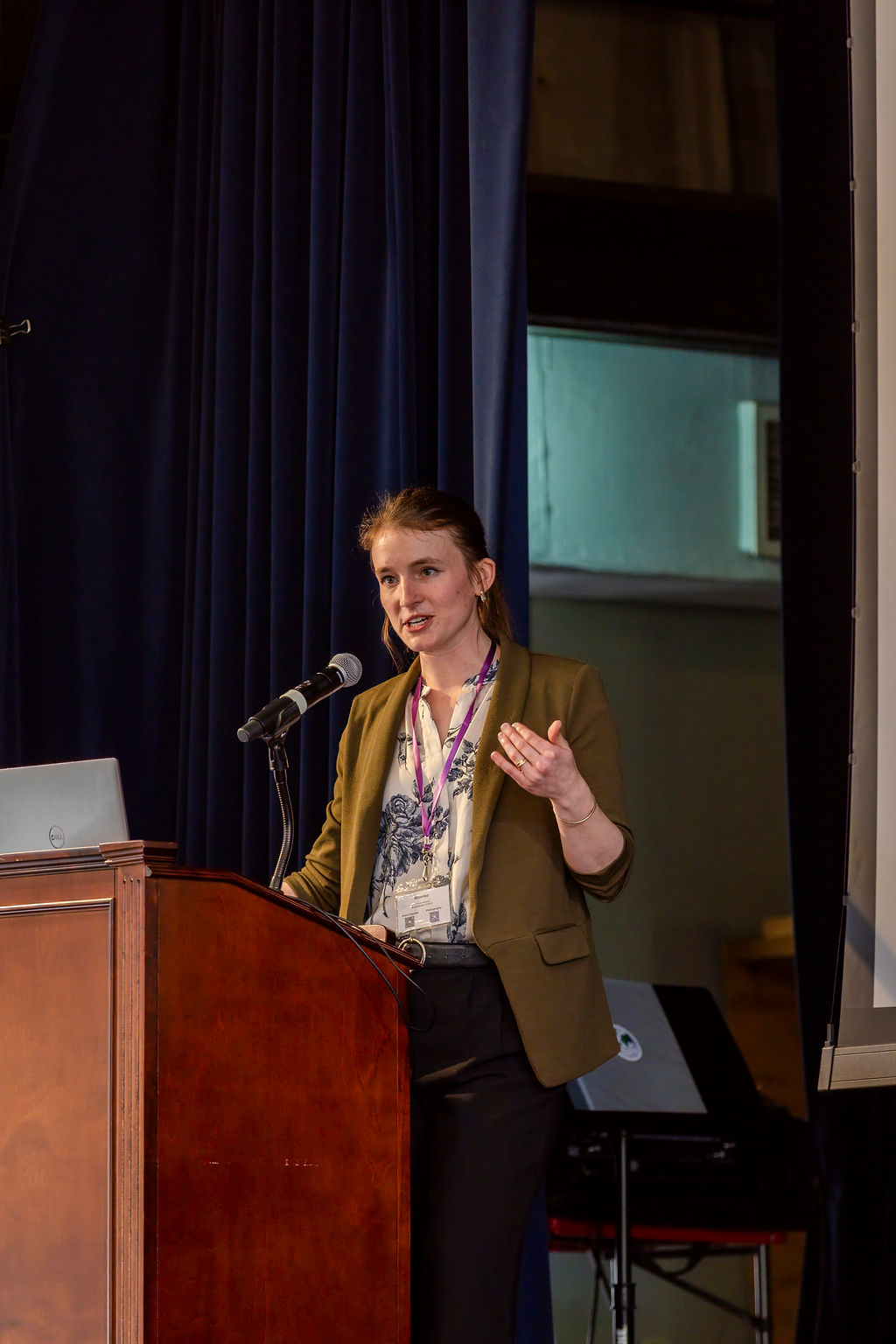
“What strikes me about CSB,” Luijten said, “is that the science is ambitious, but the culture is equally serious about mentorship and training. These are researchers learning how to think beyond traditional boundaries while still maintaining depth and precision in their work.”
The trainee presentations that followed highlighted the breadth of research emerging from CSB’s collaborative community. Rachel Mizenko of the Kamat and Leonard Labs, a Distinguished Trainee Award Postdoc Co-Winner, presented research using RNA reporter assays to measure protein delivery by lipid nanocarriers better. Dylan Brown of the Lucks Lab, Distinguished Trainee Award Graduate Student Runner-Up, presented work expanding cell-free biosensor platforms through automation, new materials, and additional targets.
Research, Training, and Translation
The second day shifted to a retreat-style program focused on emerging research and what it takes to move discoveries toward real-world use. A recurring theme was the CSB Biofoundry, the center’s shared “build and test” facility that helps teams prototype, iterate, and scale ideas, whether they stay in academia or head toward commercialization.
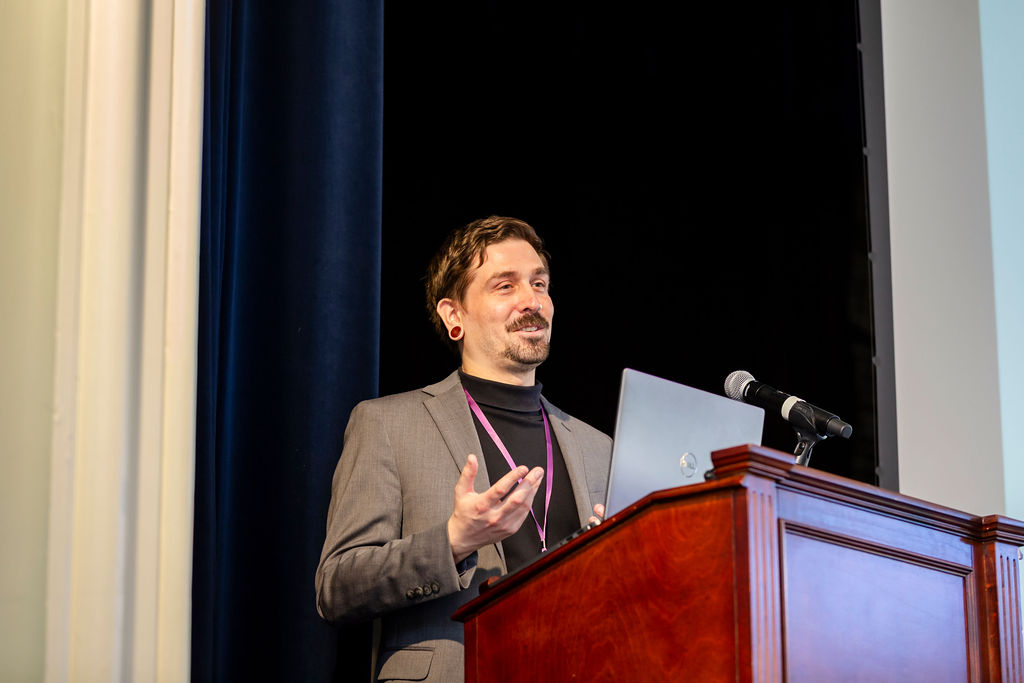
Dylan Brown, Distinguished Trainee Award Graduate Student Runner-Up
A keynote address by Mark Mimee (University of Chicago) set the stage by examining microbial engineering and translational biotechnology. This was followed by talks from Distinguished Trainee Award Postdoc Co-Winner Nitu Kumari from the Goyal lab, who spoke about molecular circuits that encode cellular states, determine fate decisions, and propagate cellular memory, and Distinguished Trainee Graduate Awardee, Daniel de Castro Assumpção from the Tullman-Ercek Lab, who spoke on engineering programmable protein nanomaterials for safe, targeted RNA delivery.
Later, the MBP Biotech Nexus panel, moderated by Tullman-Ercek and featuring leaders from Acorn Genetics, COUR Pharma, Genentech, Procter & Gamble, and Opera Biosciences, offered a candid view of biotechnology career pathways and the practical realities of moving lab discoveries into commercial development.
Across sessions, speakers returned to the same takeaway: CSB’s long-term impact depends not only on individual breakthroughs, but on the shared infrastructure and collaborative training environment that make those breakthroughs possible and transferable.
Looking Ahead: A New Textbook and The Living Electronics Initiative
The anniversary program also spotlighted two new directions for the CSB. The first is in education, where CSB faculty are working with Oxford University Press to publish a textbook for engineering biology. The textbook, a first of its kind, will teach students how to think about engineering biology holistically, incorporating knowledge across biology, chemistry, engineering, computer science and the social sciences to create technologies that address global challenges and that will have impact. The textbook is based on the CSB’s NSF-funded “synthetic biology across scales” graduate program, the first NSF graduate program for synthetic biology housed in the CSB since 2020.
The second is the new Living Electronics Initiative, a collaboration involving CSB, the Querrey Simpson Institute for Bioelectronics, and the Center for Regenerative Nanomedicine and Engineering. The initiative aims to accelerate innovation at the intersection of biology, electronics, materials science, and engineering—an area many speakers pointed to as a major frontier for the coming decade.
A Decade Built to Last
Over the past 10 years, CSB has grown into a research community that supports discovery at every stage, from foundational science and trainee development to commercialization and real-world application. Throughout the anniversary, speakers returned to one idea: CSB’s defining strength lies in both its technologies and research output, and in the collaborative scientific culture built around them.
That approach has helped make Northwestern a national destination for synthetic biology research and training, while underscoring the field’s growing role in health, sustainability, economic competitiveness, and resilient manufacturing.
As CSB begins its second decade, Northwestern is looking to accelerate discoveries across biology, electronics, materials science, agriculture and engineering while continuing to build technologies and research communities designed for impact well beyond campus.